Signature and Handwriting Forensics in 2026: Challenging Experts, Exposing Forgeries, and Winning the Document Fight
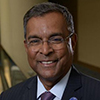
Linton A. Mohammed is a board-certified forensic document examiner who is recognized as one of the leading researchers in forensic document examination, with particular focus on signature and handwriting examination. Dr. Mohammed has testified as an expert more than 250 times in his specialty in both civil and criminal cases in the United States, England, Trinidad & Tobago, and St. Vincent, and is retained routinely throughout the U.S. and internationally.
2 hour CLE
Get this course, plus over 1,000+ live webinars.
Learn More
Program Summary
Signature and handwriting disputes have moved from a niche evidentiary issue to a central battleground across civil practice — digital document forgeries rose sharply in 2025, contested wills are climbing as the largest generational wealth transfer in history reaches probate, and AI-generated signatures now circulate in contracts, deeds, and corporate records. Attorneys handling probate contests, contract disputes, real estate fraud, employment matters, and family law are already exposed to these cases, often without a working framework for assessing whether a forensic document examiner is qualified, whether the methodology will hold up, or whether a photocopy can carry the opinion at all. The program delivers the underlying science of motor control and kinematics, the analysis-comparison-evaluation-verification examination process, the Linear Sequential Unmasking protocol that controls examiner bias, the evidentiary distinction between originals and copies, and the nine-point conclusion scale used in expert reports. Attendees will be able to retain, challenge, and cross-examine a forensic document examiner with confidence.
What Will You Learn
Attorneys will learn the scientific principles, examination methodology, bias-mitigation techniques, and evidentiary rules governing forensic signature and handwriting examination across civil and criminal proceedings.
What Will You Gain
Attorneys will gain a practical framework for qualifying examiners, challenging methodology, evaluating originals versus copies, and presenting persuasive expert testimony in contested-document litigation.
Key topics to be discussed:
- Examiner training
Full-time apprenticeship and board certification define qualified forensic document examiners. - Motor Kinematics
Neuromuscular control and kinematic principles support reliable handwriting comparison. - Examination method
Analysis, comparison, evaluation, and verification structure every forensic signature opinion. - Neurological effects
Parkinson's, tremor, and dementia alter handwriting in capacity disputes. - Bias mitigation
Linear Sequential Unmasking controls examiner exposure to extraneous case information. - Document originals
Original documents support stronger opinions than photocopies, scans, or reproductions.
This course is co-sponsored with myLawCLE.
Date / Time: September 18, 2026
- 1:00 pm – 3:10 pm Eastern
- 12:00 pm – 2:10 pm Central
- 11:00 am – 1:10 pm Mountain
- 10:00 am – 12:10 pm Pacific
 Closed-captioning available
Speakers
Linton A. Mohammed, Ph.D., D-ABFDE | Forensic Science Consultants, Inc.
Linton A. Mohammed is a board-certified forensic document examiner who is recognized as one of the leading researchers in forensic document examination, with particular focus on signature and handwriting examination. He maintains a private practice from his office in Poway, California, after a career spanning the Trinidad and Tobago Forensic Science Center, the Laboratory of the Government Chemist in England, and the San Diego County Sheriff’s Crime Laboratory. Dr. Mohammed has testified as an expert more than 250 times in his specialty in both civil and criminal cases in the United States, England, Trinidad & Tobago, and St. Vincent, and is retained routinely throughout the U.S. and internationally.
- Education & Credentials
Dr. Mohammed earned his Bachelor of Science from the University of the West Indies in 1984 and trained full-time in document examination from 1986 to 1988 at the Trinidad and Tobago Forensic Science Center in Port of Spain. He earned a Master of Forensic Sciences from National University in 2005 and a Doctorate in Human Biosciences from La Trobe University in Melbourne, Australia, with a doctoral thesis focused on the forensic examination of genuine, disguised, and forged signatures. He has been continuously certified by the American Board of Forensic Document Examiners (ABFDE) since 1998 and holds a Diploma in Document Examination from the Chartered Society of Forensic Sciences (formerly The Forensic Science Society) in England since 1996.
- Recognition & Leadership
Dr. Mohammed received the Albert S. Osborn Award of Excellence from the American Society of Questioned Document Examiners (ASQDE) in 2022, the American Academy of Forensic Sciences Questioned Documents Section Ordway Hilton Award in 2019 in recognition of outstanding contributions to forensic document examination, and the ABFDE New Horizon Award in 2012 for exceptional contributions to scientific research advancing the field. He served as President of ASQDE in 2012 after roles as Director, Treasurer, and Vice President, currently serves as Treasurer of the American Academy of Forensic Sciences for 2026-2027, and previously served as Chair of the Academy Standards Board from 2020-2021.
- Professional Involvement
Dr. Mohammed is a Fellow of the Questioned Documents Section of the American Academy of Forensic Sciences, a Life Member and Past President of the American Society of Questioned Document Examiners, a Fellow of the Chartered Society of Forensic Sciences, and a member of the Canadian Society of Forensic Science. He served two years on the Scientific Area Committee (SAC) for Physics/Pattern Evidence within the National Institute of Science and Technology/Organization of Scientific Area Committees (NIST/OSAC), which oversees standards development for forensic document examination, firearms and toolmarks, latent prints, footwear and tire tracks, and blood spatter analysis. He was also appointed to the Expert Working Group on Human Factors in Handwriting Examination (2015-2017), sponsored by the National Institute of Justice and the National Institute of Standards and Technology.
- Experience
Dr. Mohammed worked as a forensic document examiner in Trinidad and Tobago from 1989 to 1993, in the United Kingdom at the Laboratory of the Government Chemist from 1993 to 1996, and at the San Diego County Sheriff’s Crime Laboratory from 1996 until his retirement in 2010. He maintained a private practice with Associated Document Examiners from 1997 to 2010, was associated with Rile & Hicks in Long Beach (successor to Harris & Harris) from 2010 to 2012, and now exclusively works from his office in Poway, California. He is the author of Forensic Examination of Signatures and co-author with Professor Michael Caligiuri of the University of California, San Diego, of The Neuroscience of Handwriting: Applications for Forensic Document Examination, published by CRC Press in 2012. Federal Rule 26 listing his prior testimonies is available upon request.
Agenda
SESSION 1 — Training of a Forensic Document Examiner | 1:00pm – 1:15pm
Examine the academic background, full-time apprenticeship requirements, board certification pathways, and continuing-education expectations that define a qualified forensic document examiner and identify the credentialing questions attorneys should ask before retaining or cross-examining any signature or handwriting expert.
SESSION 2 — Signature and Handwriting Examination: Motor Control and Kinematics | 1:15pm – 1:30pm
Review the neuromuscular and motor-control science underlying handwriting production, including kinematic principles, line quality, fluency, and pen pressure, and learn how these scientific principles support reliable signature and handwriting comparison in civil and criminal matters.
SESSION 3 — The Method of Signature and Handwriting Examination | 1:30pm – 1:45pm
Walk through the step-by-step examination process used by forensic document examiners, including analysis, comparison, evaluation, and verification, the role of known exemplars, and the conclusion-scale framework experts apply when forming opinions on questioned writings.
SESSION 4 — Neurological Illnesses and Their Effects on Signatures and Handwriting | 1:45pm – 2:00pm
Analyze how Parkinson’s disease, essential tremor, stroke, dementia, and other neurological conditions alter handwriting characteristics, and learn how examiners distinguish disease-related variation from disguise or forgery in capacity-related disputes, wills, and contracts.
BREAK | 2:00pm – 2:10pm
SESSION 5 — Avoiding Biasing Information: Linear Sequential Unmasking | 2:10pm – 2:25pm
Explore cognitive bias in forensic examination, including contextual, confirmation, and motivational bias, and learn how Linear Sequential Unmasking sequences information exposure so examiners reach conclusions based on the evidence rather than extraneous case information.
SESSION 6 — Originals v. Copies | 2:25pm – 2:40pm
Compare the evidentiary value of original documents against photocopies, scans, and digital reproductions, and review the limitations imposed when only copies are available, including effects online quality assessment, pressure analysis, and the strength of opinions an examiner can offer.
SESSION 7 — Reporting Conclusions: Verbal and Written | 2:40pm – 2:55pm
Learn best practices for documenting examination results in written reports and communicating conclusions verbally, including the standardized nine-point conclusion scale, defensible language choices, and report content that withstands scrutiny under Daubert and similar evidentiary standards.
SESSION 8 — Expert Testimony | 2:55pm – 3:10pm
Apply practical guidance for preparing and presenting forensic document examiner testimony, covering direct examination, cross-examination preparation, demonstrative exhibits, qualification challenges, and the expert’s role in helping jurors understand signature and handwriting evidence.
More CLE Webinars
Trending CLE Webinars









© 2026 Tax Rep Network LLC